

Product name: Trisodium thiocyanate; TMT-15% 53% 85% etc.
CAS: 17766-26-6
Content: 15% 53% 85% 55%
Trisodium Tripolythiocyanate (TMT, CAS: 17766-26-6)
Common name: Trimercapto-triazine trisodium salt; Product abbreviation TMT, mainstream models: TMT-15 (15% aqueous solution), TMT-55 (53-55% solid), TMT-85 (85% high-purity solid)
General quality technical indicators (industry standard for industrial products, which can be directly used for technical bidding/procurement specifications)
1) TMT-15 (15% aqueous solution, most commonly used in the market)
Item |
Specification |
Appearance |
Colorless to pale yellow transparent liquid; no visible suspended solids. |
Active ingredient content |
≥15.0 % |
Density (20°C) |
1.11~1.14 g/cm³ |
pH (original solution) |
11.5–13.0 (strongly alkaline) |
water-insoluble |
≤0.1 % |
stability |
Store at room temperature for 6–12 months; no separation or precipitation observed. |
2) TMT-55 solid (53%~55% crystalline powder)
Item |
Specification |
Appearance |
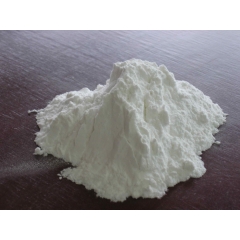
White to light yellow crystalline powder |
Active ingredients |
≥53.0 %(Super quality ≥55%) |
Water insoluble substance |
≤0.2 % |
Water |
≤47 % |
10% Water solution pH |
≥12.0 |
3) TMT-85 high-purity solid (scientific research/high-end solid waste stabilization)
Appearance: off white crystalline;
Effective content ≥ 85%;
The impurities are lower, and the content of heavy metal impurities is extremely low.
Important reminder: This product rapidly decomposes and precipitates trimeric thiocyanate when exposed to acid. It is strictly prohibited to store and mix with acidic agents.
The principle of action is that three sulfur anions on the molecule can form highly stable water-insoluble chelating precipitates with heavy metals such as Cu, Ni, Pb, Cd, Hg, Zn, Ag, Cr ³ ⁺, etc; Maximum advantage: It can handle EDTA and ammonia complex heavy metals (traditional alkaline precipitation cannot remove complex heavy metals); The generated chelates are resistant to rain water leaching and stable, making them less prone to secondary dissolution.
Detailed Application
(1) Heavy Metal Treatment of Industrial Wastewater (Core Application)
- Coal fired power plants: Wet desulfurization wastewater for mercury, lead, cadmium, and arsenic removal; It is a standard chemical for desulfurization wastewater in thermal power plants.
- Electroplating and PCB industry: deep treatment of wastewater containing copper, nickel, zinc, cadmium, and complex copper nickel to ensure stable and compliant discharge of heavy metals.
- Garbage incineration plant: Removal of Hg, Pb, and Cd from the wastewater from the rapid cooling tower and flue gas scrubbing.
- Nonferrous metallurgy and mining beneficiation: deep removal of heavy metals from smelting wastewater and beneficiation effluent.
- Battery manufacturing, surface treatment, petrochemicals, leather tanning (trivalent chromium wastewater).
Attention: Hexavalent chromium Cr ⁶⁺ cannot be directly removed. It needs to be reduced to trivalent chromium before adding TMT.
(2) Solid waste stabilization/solidification (second largest application)
Stabilization of incineration fly ash: Heavy metals in fly ash are fixed, meeting the leaching standards for hazardous waste and meeting the requirements for landfill access;
Remediation of heavy metal contaminated soil and stabilization treatment of heavy metal sludge to reduce the leaching toxicity of heavy metals.
(3) Laboratory and niche applications in fine chemicals
Analytical chemistry: qualitative detection reagents for heavy metal ions;
Organic synthesis intermediates, metal surface treatment additives.
Outstanding advantages of the product
Efficient in chelating heavy metals and addressing the shortcomings of lime alkali precipitation;
The applicable pH range for the reaction is wide (optimal pH 7-10);
High stability of heavy metal chelates and low risk of sludge leaching;
The addition equipment is simple and can be directly added to the existing sewage treatment process;
Flocculating alum flowers are dense and settle quickly.
Brief Usage Reference (TMT-15 Liquid)
Adjust the pH of wastewater to 7-10;
Add TMT under stirring conditions; React for 10-20 minutes;
Add PAC+PAM flocculation; Precipitation separation;
Dosage: Based on small-scale water sample testing, conventional experience shows that when the heavy metal concentration is 10mg/L, the dosage of TMT-15 is approximately 50-200 mL/m ³ of wastewater.
Key points for safe storage
Alkaline corrosive substances, avoid skin and eye contact;
Storage: cool, ventilated, sealed, away from strong acids and oxidants;
Transportation: Ordinary chemicals, not classified as hazardous chemicals;
The heavy metal sludge generated by the reaction belongs to hazardous waste and should be disposed of according to hazardous waste regulations.
Please contact sales@tnjchem.com to find more about TMT.

 chemical.tnj
 +8618949823763
 tnjchem
 2881500864