


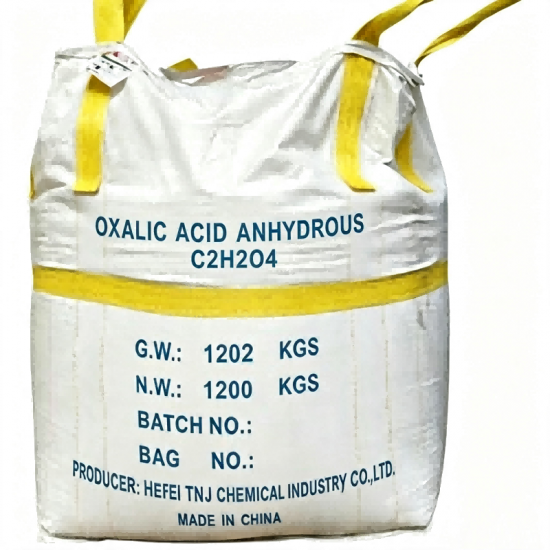
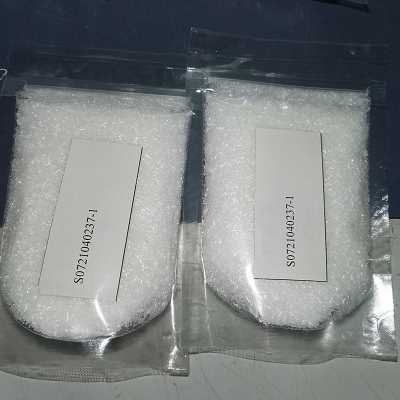
Chemical name: Oxalic acid; Ethanedioic acid; Oxalic acid (anhydrous)
Molecular formula: C2H2O4
CAS (anhydrous): 144-62-7
Common product forms: Oxalic acid dihydrate C2H2O4·2H2O (industrial mainstream) CAS: 6153-56-6
Molecular weight: anhydrous 90.03; dihydrate 126.07
Physical properties of Oxalic acid anhydrous CAS 144-62-7
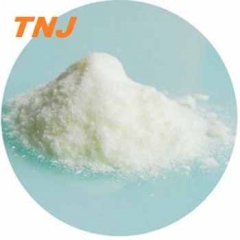
At room temperature, it appears as a colorless, transparent crystal or a white crystalline powder with no odor.
The melting point of oxalic acid dihydrate is 101–102°C (losing crystallization water simultaneously); anhydrous oxalic acid decomposes at approximately 189.5°CIt is readily soluble in water and ethanol; slightly soluble in ether; and insoluble in benzene, chloroform, and petroleum ether
The aqueous solution exhibits strong acidity, with a pH of approximately 1.3 in a 0.1 mol/L aqueous solution
Dihydrate oxalic acid is prone to efflorescence in dry air and can sublime upon heating
Core chemical properties
Organic dicarboxylic acid, which is relatively stronger in acidity among its homologous dicarboxylic acids, exhibits significantly higher acidity than acetic acid and can react with carbonates to release CO₂;
Strong reducing property: can be oxidized by potassium permanganate, commonly used in the laboratory for standardizing KMnO₄;
Strong complexation (chelation) capability: It can form soluble complexes with metal ions such as iron, rare earths, calcium, and magnesium, thereby possessing rust and scale removal properties;
Thermal decomposition: generates formic acid, CO, CO₂, and water;
It can form various oxalates (calcium oxalate is insoluble in water and is the main component of human kidney stones).
It is widely distributed in nature and present in various plants (such as spinach, amaranth, rhubarb, tea leaves, and oxalis), primarily existing in the forms of potassium oxalate and calcium oxalate. It is also a normal intermediate product of human metabolism.
Specification of Oxalic acid anhydrous CAS 144-62-7
| Test Item | Specification | Test Result | Test Method |
|---|---|---|---|
| Appearance | White crystalline powder | White crystalline powder | Visual |
| Assay (C2H2O4) | ≥99.0% | 99.35% | Titration |
| Loss on Drying | ≤0.50% | 0.22% | Gravimetry |
| Water-insoluble Matter | ≤0.05% | 0.01% | Gravimetry |
| Sulfate (SO42−) | ≤0.08% | 0.03% | Turbidimetry |
| Chloride (Cl−) | ≤0.005% | 0.002% | Turbidimetry |
| Iron (Fe) | ≤0.002% | 0.0008% | Colorimetry |
| Heavy Metals (as Pb) | ≤0.001% | <0.0005% | Colorimetry |
| Residue on Ignition | ≤0.10% | 0.04% | Gravimetry |
Main use of Oxalic acid anhydrous CAS 144-62-7
Rare Earth Industry: Extraction and separation of rare earth ores, generating rare earth oxalate precipitates (one of the most important industrial applications);
Metal surface treatment: rust removal from steel, scale cleaning, and stone cleaning;
Textile / Leather: Bleaching agents, mordants, tanning auxiliaries;
Chemical Synthesis: Organic synthesis raw materials, catalysts;
Laboratory: Analytical reagents, reference materials;Others: Stain removal for building stones, scale removal from circulating water.
Safety Risks (Key Focus)
GHS Hazard: Danger
Corrosive: The solution irritates, burns the skin, mucous membranes, and eyes;
Toxicity: Harmful if ingested. Upon entering the human body, it combines with calcium ions to form calcium oxalate crystals, which damage the kidneys. Large-scale accidental ingestion can lead to acute renal injury;
Inhalation of dust irritates the respiratory tract;Contraindicated Combinations: Keep away from strong oxidizers and strong alkalis.
Storage and Transportation Notes
Seal and store in a dry, cool place; avoid mixing with food or oxidizers; transportation is classified as Class 8 corrosive hazardous material (UN3261).


 chemical.tnj
 +8618949823763
 tnjchem
 2881500864