

Product name: Stannic Oxide (Tin(IV) Oxide / Tin Dioxide)
CAS: 18282‑10‑5
EINECS: 242‑159‑0
Molecular formula: SnO₂
Molecular weight: 150.71
Product Introduction
Tin dioxide (stannic oxide, tin ash), appearing as a white to light gray powder with a tetragonal rutile crystal structure, is an n-type semiconductor metal oxide. It exhibits strong chemical stability, being insoluble in water, ethanol, and cold acids, yet soluble in hot concentrated alkalis and concentrated sulfuric acid. With high melting point and refractive index, it possesses excellent photoelectric and gas-sensing properties.
Physical and Chemical Core Parameters
Appearance: white / light gray powder
Melting point: 1127°C
Density: 6.95 g/cm³ (25°C)
Boiling point: 1800-1900°C (sublimation)
Water solubility: insoluble
Main performance
- Excellent thermal stability, resistant to decomposition at high temperatures
- High refractive index, used for emulsification and light extinction
- The semiconductor gas-sensitive characteristics are sensitive to a variety of gases- Resistant to acid and alkali corrosion (at room temperature)
Main use
Ceramics, enamel, glass: Opacifiers, matte agents, enhance the whiteness and gloss of glaze
Electronics industry: Transparent conductive film materials, gas sensors, battery materials, electronic components
Chemical Catalysis: Catalysts and Catalyst SupportsOthers: Polishing and grinding materials, tin salt synthetic raw materials, fabric mordanting and weight-increasing agents
Common Industrial Quality Indicators (Industrial Grade)
| Main content of SnO₂ | ≥ 99.0% |
| Fe Iron | ≤ 0.035% |
| Pb Lead | ≤0.04% |
| Sb Antimony | ≤0.03% |
| Loss on ignition | ≤0.5% |
Packaging and Storage
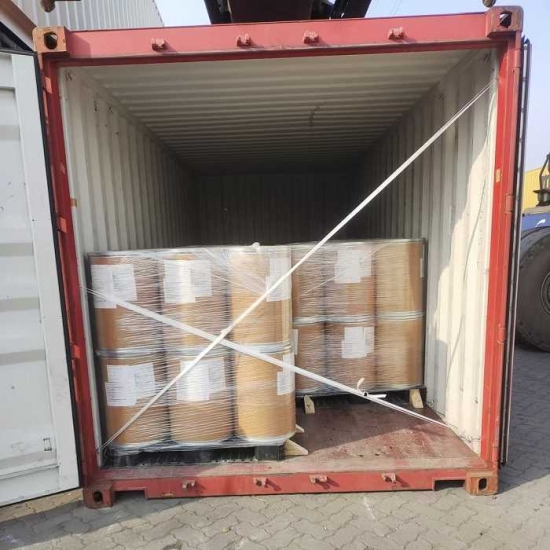
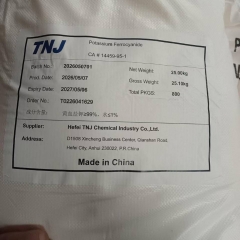
Packaging: 25 kg with plastic liner, iron drum / cardboard drum.
Storage: Store in a cool, dry, and ventilated warehouse, keep sealed, and avoid moisture.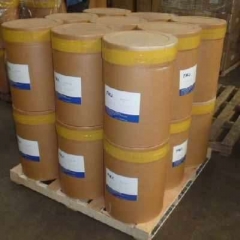
 chemical.tnj
 +8618949823763
 tnjchem
 2881500864